Every Time I See a Bike

Without fail, every time I see someone (especially a child) riding their bicycle I feel like I can’t breathe for a moment and I am overcome by a plethora of emotions. I remember when Luca was really young, he loved vehicles especially cars and bicycles. He had a tricycle that he loved to ride, and he was so happy when he got his first bike with training wheels. It was orange and the seat had flames on it. He thought it was the coolest bike in the world. I remember we made a special trip to the store so Luca could pick out his very own helmet and the first few times he used his new bike we took pictures and celebrated every moment. Around the time Luca was diagnosed with ITP in 2015 he wanted desperately to learn how to ride his bike without training wheels on. All his friends were riding their bikes without training wheels and he wanted to do this too.
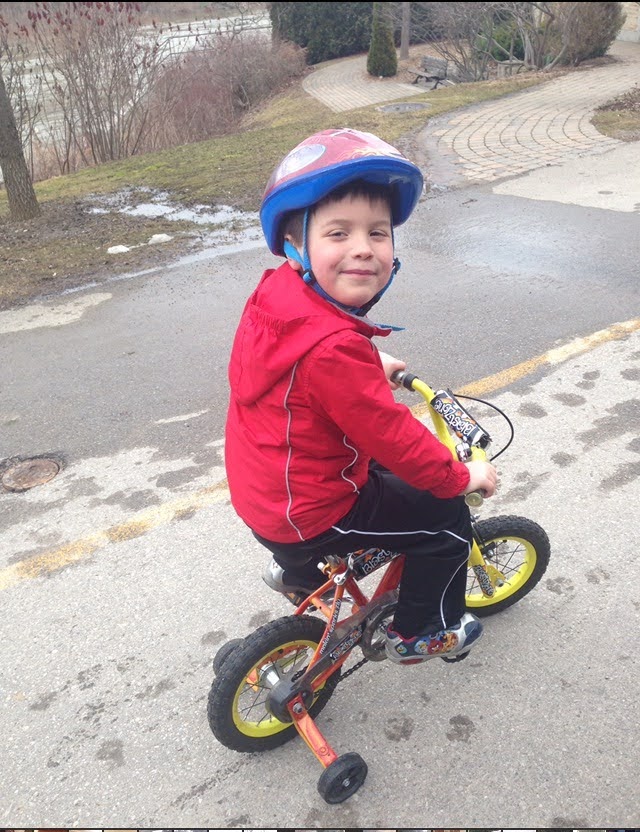
Luca – bike riding (2015)

When Luca was first diagnosed with ITP his specialist was very confident Luca’s autoimmune blood disorder was temporary and would disappear within a year. Since Luca’s platelet count during this first year was almost always below 20-30,000 (normal range is 150-400,000) we decided to keep his training wheels on for a little while longer. We didn’t want to take any chances, and we wanted to keep Luca safe. It seemed like a small sacrifice, and it was only supposed to be for a year.

A year passed, and Luca was diagnosed with chronic ITP, which meant his condition was life-long with little chance for remission. His levels were lower in the second year (on average) and he had more spontaneous bruises and clusters of petechia from time to time. Out of fear, we told him we wanted him to continue to keep his training wheels on. At this point, Luca was 8 years old. He was embarrassed and decided he would not ride his bike anymore.

The following summer, in 2017, we were started to relax a bit more. We replaced Luca’s orange bicycle with a larger blue one. Luca was still considered a non-bleeder until that fall, and we knew we would be dealing with this for life and that Luca would continue to have restrictions in his lifetime. We wanted him to live his life knowing that his self-esteem and life skills were important too. His hematologist and team were completely fine with Luca riding a bike, as long as he had a helmet on. At this point in his ITP journey, Luca’s levels were almost always below 10,000 (on average). ITP wasn’t going away, and Luca was becoming more upset that he was unable to do simple things other children his age could do. Part of this was just a reality for Luca, he had ITP. If his hematology team was okay with him riding a bike, we figured we should be too. So, with a lot of anxiety, and no more training wheels, my husband taught him how to ride his bike. One night was spent just learning how to balance on the bike in our driveway. Then, we went to the school grounds to practice since the landscape was flat. My husband ran beside him to keep him safe. Luca was so proud when he mastered riding his bike. I cannot even describe the smile on his face he had. It was ginormous.

Unfortunately a few weeks later, when Luca was trying to slow down to avoid hitting a little girl, he ended up bumping into her accidentally. Thankfully everyone was okay, but the little girl was crying because it scared her. Luca’s heart broke. He felt so terrible. He refused to ride his bike again. Refused. He only wanted to use his scooter. We reassured him it was an accident but didn’t push him to ride his bike. We thought by the following summer he’d forgive himself and want to ride again.

A few months later Luca became a bleeder. He had pretty serious bleeding events, and his platelets continued to be less than 10K. We were terrified, but knew this was ITP and we needed to learn to give Luca the best possible life so he could cope with the increasing anxiety caused by his blood disorder.

When the first nice warm spring day rolled around, I suggested going for a bike ride. It was April 30, 2018. Luca was very apprehensive. I could tell he wanted to, but I knew he was scared and didn’t want to fall and hurt himself. I told him “Luca, you are bigger now. If you feel like you are going to fall slow down and put your foot down, the most that will happen is you will scrap your leg you can do this”. I convinced him to ride his bike. We drove to the park by our house because the sidewalks are too close to the road, and we wanted Luca and his brother to ride only in the park where there was open space and it was safe. Once we got to the park, Luca’s little brother took off on his bike riding up and down the path. I remember walking beside Luca pushing his bike along for him and he looked sad. I asked him what was wrong. He said, “I better not, mom”. I told him he could do this, and should do this. He trusted me. He got onto his bike, with his helmet on, and rode up and down the path. A few times my hubby was running alongside him until he felt comfortable again. By the time we had to go, Luca had the biggest smile on his face. And he said to me “Mom, thank you”.
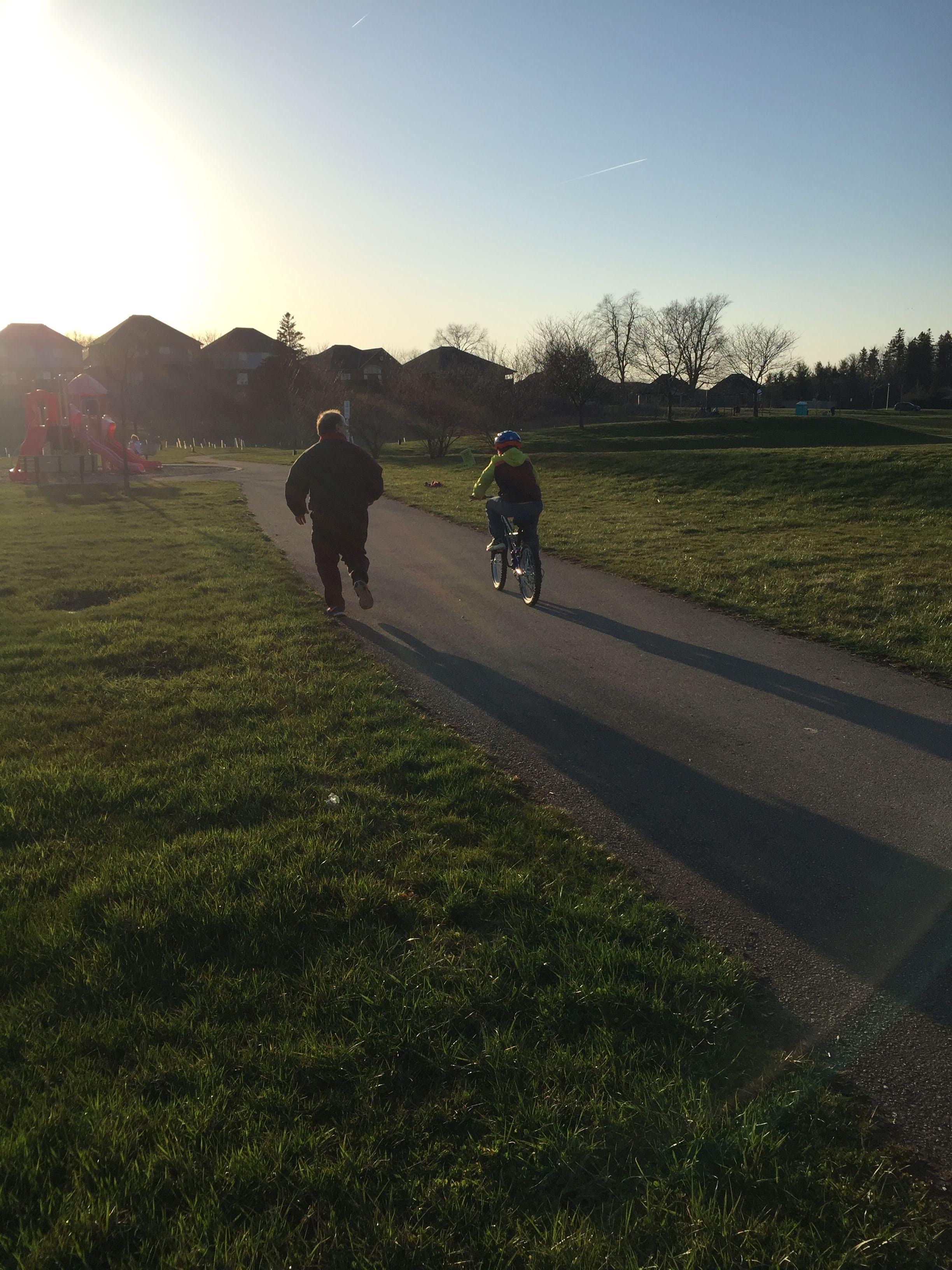
April 30, 2018. Luca riding the day before his bike fall (my husband running alongside him).

After school the following day, May 1, 2018, I picked up Luca and his brother from school. First thing Luca said to me after telling me he had another nosebleed at school was, “MOM! Can we ride our bikes again after dinner?”. He was living his life again, not fearful he would hurt anyone, and not holding back due to his ITP. After dinner, we drove to the park. Luca rode with such confidence up and down the path. And then all the sudden, disaster happened.

Luca fell off his bike. Luca fell because he was slowing down to avoid colliding with a group of ladies talking on one side of the path while their children frolicked at the playground. The group of ladies had been there for a while, but while chatting they were moving closer to the center of the path. Luca was scared he would hit them, so he slowed down steered around them but lost his balance. He put his foot down while slowing further down (just like I told him too) but somehow, he fell over his leg and on top of a group of parked bicycles across from the group of ladies. He didn’t hit his head at all, and he wasn’t even going that fast. His chest took the impact. I didn’t see him fall with my own eyes, but I heard him when he started to cry. My husband witnessed the entire event, as did a close friend who was part of the group of women chatting along the path.
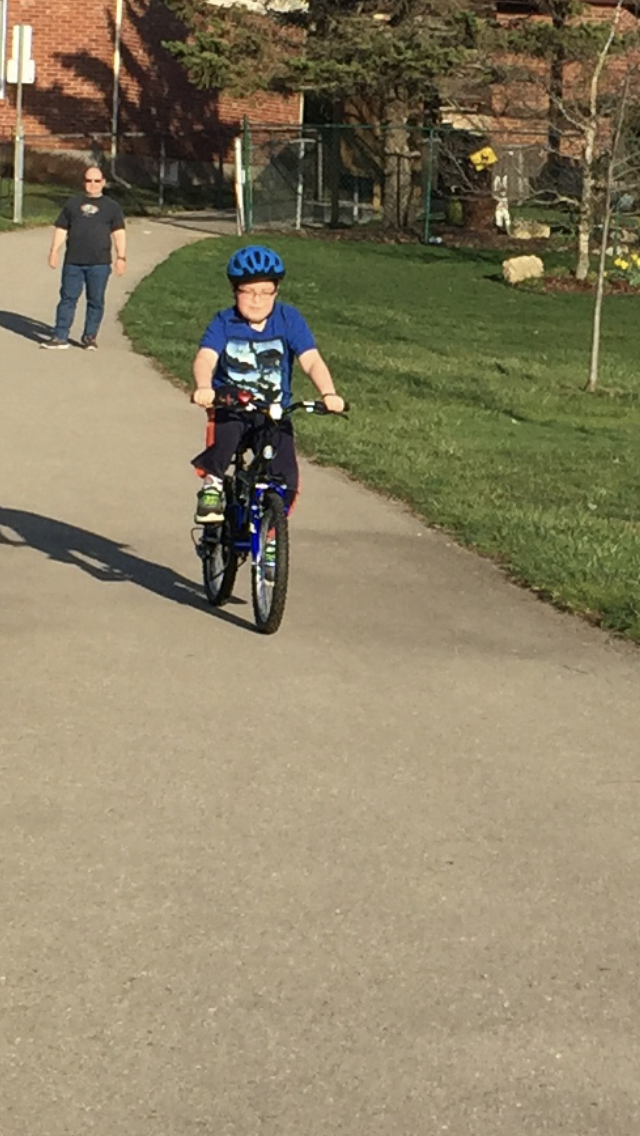
May 1, 2018. The night Luca fell off his bike.

Luca was walking towards me hysterical, tears streaming down his face, and his eyes full of fear. He was terrified. He lifted up his shirt as he got closer to me to show me the damage. I froze. I froze like time stopped and I felt anxiety rush through me. I thought to myself ‘oh my God, I broke him’.

I was terrified. I was simply terrified, and I knew he was too. Adrenaline pumped through my veins and all I wanted to do was take him home. We drove home, I drew a lukewarm bath, and I made him soak for a while. I asked him if his head hurt so many times, he said no. I asked Luca if his side hurt, worried he’d have hematuria again or another internal bleed. He seemed fine. He just had a scrape over one side of his chest that literally looked like a panther mauled him. It wasn’t dripping blood. It was oozing a bit of puss and small amount of blood. But the bath helped the scrape to scab over.

We notified his specialists the following morning. I sent them a photograph of the scrape and they asked to see Luca immediately. The specialist poked around Luca’s abdomen and determined he wasn’t bleeding and asked if his stomach was always this bloated. This bothered me because Luca heard and he was very embarrassed about his weight. So I told the hematologist Luca’s been retaining water in his abdomen since the last time he used dexamethasone. He had gained a lot of weight since using the steroid last in February. We used to tell Luca it was water weight since he was ashamed. We were told Luca’s platelet count was less than 5,000. We had never been told his platelet count was that low. We were also told he might develop a hematoma at the site of his scrape and that his ribs protected him and that he’s going to be fine, but if we are worried about the hematoma to bring him back in. This hematologist also told us Luca’s hemoglobin was a bit low. At the time, we did not know what the level was or that it had been the lowest it ever was even during previous critical bleeding events. I did ask if we should repeat the blood test to make sure he’s not bleeding somewhere, and immediately the idea was shut down and we were told it’s probably a concentration issue. I thought quietly to myself ‘ask about treatment’ but we were being rushed out so I thought I’ll call his nurse practitioner if I am still worried the following day.

Luca was fine over the next few days. He did develop more bruises and was already covered in petechia and small blood blisters on his lips when he had the bike accident, but otherwise there was no indication anything could be wrong. Until May 7th, five days later.  Luca started to experience symptoms of a brain bleed, but his specialists were unaware of how all brain bleeds present and they believed he was developing a bug. We called three times in 24 hours to see about bringing Luca in, and all three times we were reassured Luca would be fine. He was not fine. He was dying from a brain bleed and increased intracranial pressure that ended up taking his life and changing our lives forever.

We now know that Luca’s increased intracranial pressure was very likely due to the fact that he very likely had a slow bleed from the bike accident, that went unchecked and built up over time until the intracranial pressure caused parts of his brain to displace and cause typical neurological symptoms such as slurring his words when speaking. If Luca’s symptoms of extreme fatigue and a returning headache and lack of appetite had been recognized as signs of intracranial pressure and a bleed, intervention could have started more than 24 hours earlier and maybe he could have survived. Had he been treated 5 days earlier when we were last in the clinic, he may still be here. If Luca was treated over 6 months earlier as we requested to keep his platelet count elevated above 10K this likely would never have happened. My husband and I believe Luca’s death was preventable and because of his hematologists/specialists arrogance and condescendence, he slipped away from us.

Even though I know it was his doctors job to manage his ITP and prevent this from happening, there are still things I will never forgive myself for. It was my idea for him to ride his bike. He trusted me, and I failed him. And I ended up having a hand in his death by allowing him to ride his bike. The guilt is too much to handle most of the time. At least while he was soaking in the bath after the fall and told me he was okay, I told him I was so sorry and so scared. He forgave me. I wish I could do the same for myself.

I believe Luca’s levels should never have been that low when he was a bleeder, and already had serious bleeding events prior to the bike accident. If indeed his brain bleed truly happened from the force of a bike fall, in which his head was not physically injured and he was not even going that fast on a bike, then it’s not safe to have levels that low and he should not have been allowed to do anything much less ride a bike. He was an accident waiting to happen, and he did feel like a ticking time bomb. I will always wonder if I had not pressured him to ride his bike, if he would still be here.


Dying From ITP: When My Son Lost His Life to a Sudden and Unexpected Brain Bleed

My son Luca died in May (2018). He had just turned 10 in February. I was not expecting it. It was sudden and horrific. He developed a brain bleed secondary to his autoimmune hematological disorder, called immune thrombocytopenia purpura (ITP). After two craniectomies to reduce swelling he was soon pronounced brain dead and we had to go through the process of stopping life support, and watching his body die in front of our eyes.

ITP causes a person’s immune system to attack their own platelets. Having low platelets means you are at risk to develop serious bleeds. Fortunately, most do not. And most children with ITP have the acute form, meaning it resolves within a year. Luca’s ITP did not resolve. At eight years of age, he was diagnosed with chronic ITP. A form of the disorder that is lifelong with minimal chance for remission.

Most individuals with ITP only have minor skin bleeding that presents as exaggerated bruising and/or a red non-blanching pin-point-like-rash called petechia. In some cases, heavy nose bleeds and heavy menstruation (in women) can occur as well. In rare cases, ITP can also lead to more serious bleeding presenting as spontaneous oral gum bleeding, mouth blisters, ocular bleeding, hematuria (blood in the urine), gastrointestinal bleeding or bleeding affecting other internal organs, including intracranial bleeding. Severe bleeding is rare. The quoted risk by current experts for visceral bleeds with ITP is only 4%, and the risk believed by many experts for an intracranial hemorrhage is less than 1%. Luca was the rarest of the rare.

About 2.5 years following his diagnosis, in the fall of 2017, things changed.

Luca started out as a low-risk case. He was even termed a ‘non-bleeder’, having only skin bleeds and a couple of very minor nose bleeds. We bought humidifiers and scattered them all over our house to reduce the incidence of nose bleeds. About 2.5 years following his diagnosis, in the fall of 2017, things changed. He became ‘a bleeder’. His platelet level was always below 10K (normal levels are 150-400K) in the critical range. He had frequent nose bleeds at school (where they do not have humidifiers), epic nosebleeds at home that required an emergency room visit at our local hospital to stop, and stomach bleeds. He would also throw up random blood clots from his stomach, vomit coffee grinds, developed oral bleeds, mouth blisters, and hematuria in addition to his widespread significant skin bleeding.

He was only treated when he was actively bleeding, even though he had severe thrombocytopenia (levels less than 10K). We were told that was what the guidelines indicated. I think I may have even glanced over them myself years ago to just see for myself that there was no minimal platelet count in which treatment was recommended. The previous version of the guideline’s did spell out treating under 30K regardless of symptoms. What I didn’t read more closely in the guideline is the suggestion to treat when levels are low and serious bleeds have occurred at such low levels. Prevention is a goal of therapy.  Luca was not a bleeder at that time, so I didn’t really pay attention I guess to that part. I trusted the respected physicians Luca had on his side to know this information. The revised 2011 guidelines for ITP treatment were the current guidelines when Luca was alive and are based on studies (that are not longitudinal and do not match patients up based on similar clinical features) that suggest the risk overall for a brain bleed is less than 1%. The risk for a brain bleed is so rare, it’s not really even though about, so the risks of the treatments are weighed against the benefits. I believe, his levels should have been kept up always once he became a bleeder since his body was giving us warnings that he could not tolerate such low platelet values anymore. Luca went from the first week of February to first week of May with NO treatment, nothing keeping his levels up. Nothing. And worsening skin bleeds and continual mouth blisters and oral bleeds.

My husband and I believe Luca’s brain bleed started on May 7th because he complained of a headache in the morning, but it had gone away with Tylenol before school started. He had headaches before, and they always resolved. Around lunch time the school called to say Luca was very tired and needed to be picked up. I happened to be getting ready to fly the next day to an out of province conference and was rushing to finish things up in the office, so when I heard he was tired, the first thing I wondered is ‘is he faking this because he’s sad I am leaving tomorrow?’. My scheduled departure for the conference was stressing him out and he was sad reminding me how we’d never been apart that long.

I called up a friend who worked at the daycare attached to Luca’s school and asked her to check on him, and when she called me back it was clear something was wrong. She allowed me to talk to Luca on her phone and I remember he said “mommy, please hurry I feel really tired” and when I asked him if he’s ever felt this tired before he said “I feel like I did the last time dexamethasone didn’t work”. At first, I had not clued into what that meant. Later I realized, he felt as tired as he did the day he woke up with a broken blood vessel in his eye and gum bleeding and we started dexamethasone, only to later learn it did not elevate his platelet count significantly. It did stop the bleeding, however. My heart was racing.

I wondered if he was having a brain bleed because his levels were so low, and the night before he had an argument with his dad and he was very upset. The argument arose because Luca had shared with us that while his best friend was over earlier in the day, they made a video and posted it on YouTube, creating his own YouTube channel called Universe Gamer. We had previously told him no and we were upset we had not been able to preview the video first to ensure it was safe to put onto the internet. I thought we had already moved passed this when we shared why we were less than thrilled, but while I was in the shower that night, my husband told Luca as a punishment he would be losing his tablet for three days and he freaked out. He ran upstairs crying, busting in the bathroom while I was in the shower, his face beat red angry with tears rolling down his face screaming about how he lost his tablet for three days. I told him to calm down and that he would not be losing his tablet for three days that was ridiculous. I was so angry because my husband waited until I wasn’t around to decide on this punishment, and I knew his platelets were so low and this would anger him. I had anxiety the stress this caused him could cause a brain bleed. So, you can imagine how I felt the following day when he did have a headache.

Before picking up Luca from school, I had called a member of his hematology team to see if extreme fatigue could be related to his earlier headache and if they wanted to reassess him, but the team member I spoke to felt it likely wasn’t because his headache resolved, and he was able to walk around. So, the conclusion was he was likely developing ‘a bug’. I left work as soon as I could to pick him up.

I was very worried. Five days earlier following a bike injury, we were told his platelets were less than 5K and his hemoglobin was the lowest it’s ever been. His team felt it was not necessary to repeat his bloodwork the following day, and treatment wasn’t suggested. They assumed his low count was a concentration issues. This wasn’t unusual as most of his team felt he should only be treated when he was actively bleeding. However, with petechia and bruises everywhere, and blood blisters on his lips I was nervous. When I picked him up, he seemed a bit depressed, but otherwise okay. Not how I imagined a kid having a brain bleed would be like. When I asked him if he was okay, he said ‘yeah I am just tired and I want to go home’. I did notice in the parking lot when he looked at me that he had a tear blue bruise above his left eyebrow. He said he got it from a lightsaber when playing with his best friend when they were making the video. I told him ‘You have to tell me these things!!”. He got angry and said it was fine it didn’t hurt and it wasn’t a big deal. He told me twice to not worry. At this point, I didn’t believe he was having a brain bleed but I was highly suspicious he would have another GI bleed perhaps blood in his stool as that was really the only other symptom he had not yet experienced (apart from a brain bleed) from the list of possible ITP symptoms. I made him go to the bathroom as soon as he got home. He was in the washroom for a long time. When he came out I asked him if there was any blood, and he said no. He got onto the sofa and asked for a blanket and had a nap. I kept waking him up because I thought about a brain bleed again, but he woke up each time I poked him every few minutes and seemed ok. I decided I was being foolish for worrying about something that wasn’t happening and I thought okay, he’s just fighting off an infection. I remained on edge because I knew his levels were low, and when he’s sick they drop even further.

My husband and I literally used to say to each other “He’s going to be the kid that gets a brain bleed and they won’t know what to do.”

I was always worried Luca would be that kid who developed a brain bleed. My husband and I literally used to say to each other “he’s going to be the kid that gets a brain bleed and they won’t know what to do”. Because they downplayed the risk all the time, even when he had a headache. While I joked about this, I never really thought he would be. And he was that kid. It actually happened. He actually was that kid. And when they found out one of his doctors who saw him last following the bike accident actually said ‘omg, who knew? Nobody could have seen this coming?”. REALLY??!!! I mean, REALLY??!! In hindsight, I read that having hematuria and GI bleeds and mucosal bleeds puts you in a different risk category especially when there is a marked change in bleeding patterns. He didn’t have the thunderclap progressive headache that was ‘the worst headache ever’ we were told to watch for. I don’t know why I didn’t do more reading on brain bleed symptoms or intercranial pressure symptoms beforehand, but not everyone with a brain bleed presents this way. I was always reading articles on ITP, but my personal research was directed to reading about causes of ITP, various treatments and their risks, epigenetics of autoimmune disorders such as lupus and ITP. I was one of those moms always on the internet reading and learning. In fact, I am still doing this, and Luca has died.

His team went out of their way to remind my husband and I on multiple occasions they are experts and even corrected me many times when I commented that ITP is rare. It is rare. Period. The Rare Disease organization would not feature ITP on rare disease day in February if it was not a rare disease. I think they were trying to make us feel more relaxed dealing with something they didn’t think would turn out like this. It feels like his team of specialists played Russian roulette with my son’s life without seeming to fully respect and understand the nature of his condition.  

His symptoms of a fluctuating low-grade headache, extreme fatigue, zero appetite, vomiting, light sensitivity, and falling in and out of sleep was chalked up to ‘him getting a bug’. He was not seen personally for an evaluation to just make sure. The assessment of his symptoms and his teams conclusion he was sick with a bug was all completed over the phone. By the time Luca started slurring his words and losing the ability to walk and talk on May 8th around 4pm, it was too late. His brain bleed took over. He was unconscious by 5pm and it took approximately six hours to get his platelets high enough to do a craniectomy (which is where they remove part of his skull) to allow for space in cases of increased intracranial pressure.

We were scared we already lost the boy we knew and loved so dearly.

Initially, his surgeon told us that she was not very hopeful since his left pupil was fixed prior to surgery. However, following the first craniectomy, his pupil became unfixed and he was responsive for several hours. His pressure was also very good and maintained for several hours. His surgeon did tell us ‘his brain is still very sick’ and it wasn’t until later that I learned he already had some brain tissue death as the colour of his brain was not quite like that of a healthy brain. We were prepared for lots of rehab and was told it could be three months before part of the skull that was removed could be reattached. Thus, he would need to be in the hospital for a long time. The surgeon also prepared us for personality changes since the bleed started in the front lobe area. We were scared we already lost the boy we knew and loved so dearly.

I had mentally prepared for quitting my job as a genetic counsellor at the hospital and devoting my days to helping him regain any losses. Literally, I mentally checked out of my job during that conversation– just like that, I was done. My husband was on board with doing whatever we could for him. It wasn’t until much later that I asked myself ‘what if he never walks again, or talks”? I know his surgeon was relieved to learn he was a lefty because she was concerned that he may not be able to write or use his right hand well. But at that time, I just wanted to talk to him as I imagined he was pretty scared. And pretty angry I imagine as he kept saying for weeks before ‘I think something is going to happen to me soon, my petechia is everywhere” “I am scared something bad is going to happen soon”.

I hope Luca knew I was there with him in the hospital, that I came back from Montreal. I should have never left in the first place. I had decided to leave because I was reassured by his team within three separate phone calls to them over a 24-hour period that he was just fighting a bug. I felt pressured to attend the conference as I was presenting a poster. When I received a text from my husband to come home fast, Luca was slurring his words, I had to find my way back. It was the scariest time of my life. By the time I arrived back in town, he was already in surgery. I did not get to talk to him again. I did not get to say goodbye.

My last conversation with him that morning was about bringing him back ‘Robucks’ for this beloved Roblox’s game. I have a lot of regrets, including getting on the plane in the first place to attend a conference, when my gut was scared as hell. I knew he was sick and I was so scared his platelet count would drop to nothing and what if throwing up caused a brain bleed. I sensed something awful could happen, I just didn’t think he was having a brain bleed. I didn’t listen to my inner voice. I wanted to believe the conclusions the team made about his ‘sickness’. I felt pulled between my job and listening to my gut. My gut had been wrong before. Maybe it was wrong this time too?

Following the first craniectomy, I was able to hold his hand. He was in an induced coma, and I could tell his fuzzy pre-teen hair had been shaved and his entire head was bandaged up. He could not hold my hand back, but I talked to him, and hoped he could feel us holding onto him.

He had a full team of ICU nurses caring for him and at one point I remember they said he had developed diabetes insipidus due to his brain injury. The nurses were very reassuring and said they would teach us how to deal with this new diagnosis, on top of his brain injury, on top of ITP. Poor Luca had so many IVs and lines coming out of him. It was awful. I knew he would be upset if he knew what was happening, it was hard enough for him to deal with a needle, let alone several out of every arm, and leg vein. Honestly, he was covered in tubes. Around 5:30 am it became impossible to stay awake. I had to sleep. I had been up for over 24 hours at that point. One of the nurses told me I could rest in a room down the hall. So, I did. My husband went home to make sure our younger son went off to school ok in a few hours.

I was a mess.

I woke up around 6:45am because I didn’t want to be gone too long, and when I woke up I just cried. I cried because I was right, he was that kid that would develop a brain bleed and nobody did anything to prevent it. I cried because I knew he was scared, I cried because I was scared, I cried because I was worried about my job and leaving the conference I was supposed to present a poster at (I was first author for the first time ever! And my team was depending on me to represent them), I cried because I was angry. I cried because I worked so much and often put work over my family and I hated myself for leaving to attend a conference when Luca needed me. I should have been there. I then decided Luca needed me I needed to pull myself together he wasn’t dying, he needed me. I went to the washroom, tried to fix my hair, and then minutes after 7am I rang the buzzer to the ICU to return to Luca’s bedside.

There was a delay – and I could tell by the sound of the nurses’ voice on the other side of the buzzer that she was hesitant to let me in. I got to his bedside, and all his team and some doctors were crowded around him. His intracranial pressure spiked again. They were not sure if it was the sensory chip in his brain malfunctioning because he had been so stable all night, or whether the swelling was returning. I asked what they are going to do about it and they explained they had already put a call into the neurologist. They were sure it was just the sensor thinking maybe it had dislodged. They didn’t seem worried. I was. I kept watching the pressure go up. And up. Eventually one of the nurses just turned the machine around so I couldn’t see it anymore. It was incredibly high, and all I could do was hold his hand and watch him. I was helpless, and anxious. I wanted them to do something like in Grey’s Anatomy where people move fast, it’s chaotic but they rush to save lives. But that didn’t happen. We were just waiting. And waiting. It seemed like forever. I later wondered if maybe they had already given up on him.

I called my husband to come back and by the time he returned it was after 8am and we were still waiting for the call from the neurology specialist. Shortly after my husband arrived, the team indicating his heart rate was dropping, his eyes were fixed, and pupils blown! And he was not responding. I felt time was in slow motion, and I felt like I was just an observer hearing unknown medical phrases being called out. I felt very dissociated from myself. I didn’t cry. I was in shock trying to process what this meant and trying to process the sad looks on the nurses faces trying to tell me non-verbally ‘we are losing him’. I looked down at my husband who was sitting on the chair behind me. He was starting to cry. I’d never seen him cry before. I felt like everything was in slow motion. I felt nothing, and everything all at the same time. They took Luca for another CT scan and it was clear his brain swelled it had mushroomed over the other side and caused an ischemic stroke that was pretty bad. The swelling had also pushed his brain over to one side and he was not able to breath on his own without the machines.

It felt like hours later, not sure why there was a delay, but he had a second craniectomy mid-morning. Since his heart was slowing down, and he was dying on his own, we were told we could let nature take its course, or consent to the second craniectomy to give us more time, but that it would not change the outcome. We selected to do the second surgery but refused to give up hope. We knew Luca was fighting to stay alive. He was our ITP warrior. Even his child-life specialist ran up to see him to give him a toy before surgery (it was a knight) that he used to play with when he came in for blood draws because ‘he is a fighter’ she said. We put it in his hand.

After the second surgery Luca remained unconscious, and we were not sure if he had any brain function. His pupils were still fixed or blown, his was not taking breaths on his own the machine was breathing for him. Another CT revealed after the surgery very little ‘living’ brain tissue, and we were told that the ‘bad’ brain tissue would take over like gangrene and he would not recover. We spent the next few days (which included Mother’s Day) holding his hand, playing him music, talking to him, having friends and family visit him, his class made him cards, his teachers visited. I slept beside him every night. We pushed another bed beside his so I could sleep beside him. I cried beside him. I didn’t want to leave his side. I didn’t eat for days. I learned how to clean his eyes, how to clean the brown stuff coming out of his mouth that smelled like rot, and I learned how to live with machines constantly beeping. I didn’t want to stop holding his hand.

The nurses in the ICU made some beautiful hand moulds with us as a keepsake, and we even had the opportunity to work with an incredible photographer who took lovely photos of Luca and us holding his hands. It’s hard to look at the photos now because it reminds me of the trauma, but it was nice to be able to do something with him for the last time. My favorite mould is of Luca holding his brothers’ hand.

He wanted to live. He wanted to be treated. He wanted to stay here with us.

On May 15th following a routine brain death test and a nuclear scan, he was pronounced brain dead and we had to remove him from life support. And hours later, the funeral home came for him. We of course had to arrange all of this the day before. I had very specific criteria – he was not to be placed in a body bag EVER. They treated him with dignity. I will blog about my last moments with him another time.

Life without the boy who made me a mom has never been the same. And to think, on May 6th he was perfectly ‘normal’. He wanted to live. He wanted to be treated. He wanted to stay here with us.

I will never forget the time I had with my little boy, but I will never stop wishing I had more time with him because he was the light in all our lives.

Note: We will be writing a book to talk about Luca’s life and our experience living with ITP and going through the medical system. This post is just a taste of what Luca has gone thought.

Don’t Worry, It’s Rare!

Photo by Leif Blessing on Pexels.com

By definition, rare implies both uncommon and unusual. Luca was rare. A treasure. When I look back, even from the beginning of his life, there were signs pointing to how my little man, the one who made me a mom, would be exceptional.  

There is a 5-12% chance that a neonate will pass meconium within the amniotic fluid after 37 weeks’ gestation. A small proportion of this select group of neonates will swallow meconium and require intervention to assist with breathing. Luca was one of those neonates who swallowed meconium, however he did quite well and required only minor assistance at delivery.

Once delivered, he was quickly whisked away also because he was born with a condition called hypospadias. A birth defect that affects 1 in every 250 males (less than 0.5%). This is a common birth defect where the urethra (pee hole) is not on the tip of the penis, but rather on the shaft. Anatomically, everything works as it should, but the location of the urethra needs adjusting. He was also born with a tiny round hemangioma on this leg. Less than 10% of infants develop a benign hemangioma, and those that do are usually pre-term and weight very little. Luca was a full-term normal weight infant.

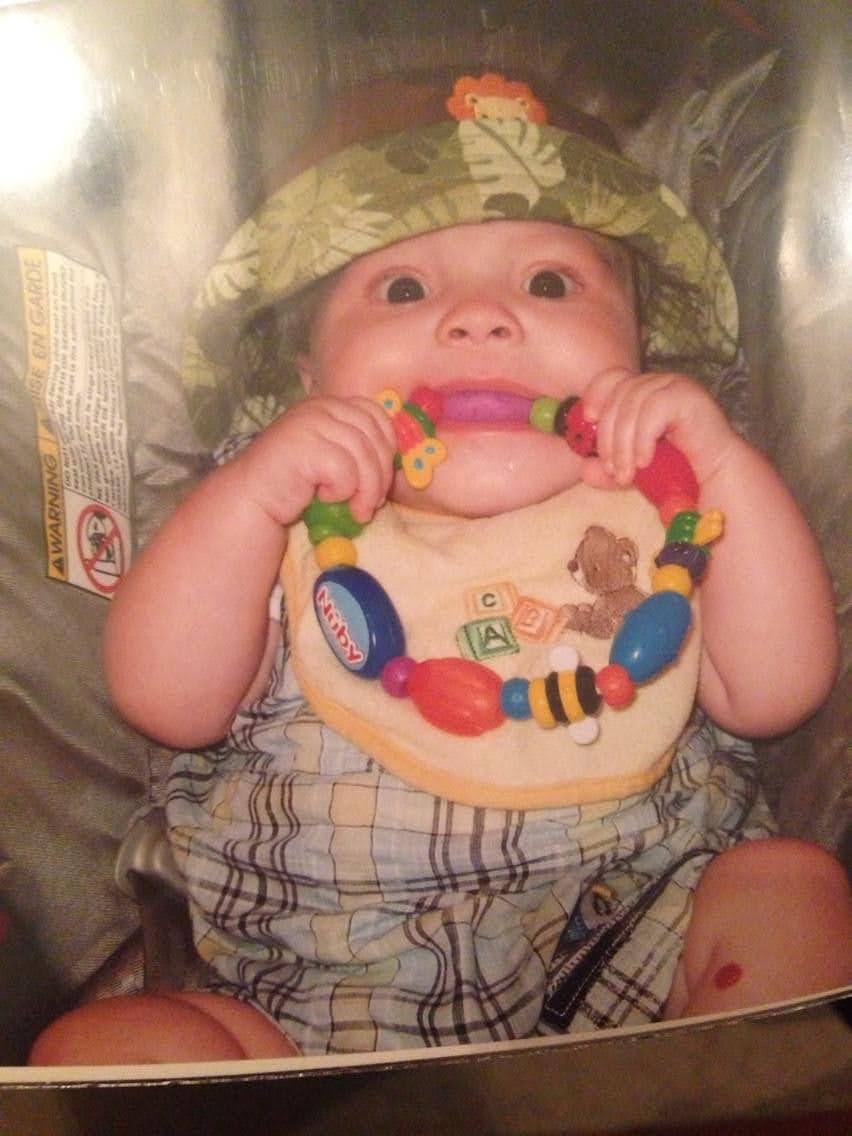
Baby Luca

I remember we were told by his pediatrician that the urology team at our local hospital would never consider doing surgery on an infant his age to correct hypospadias, he was too young. So, his pediatrician shared with us that he wasn’t even going to send in a referral to urology until he was over a year old. So, we had to wait. I was looking forward to that “mom milestone” when your baby boy ‘tinkles’ on you during a routine diaper change. Everyone talked about it happening. Friends and family even purchased ‘pee-pee teepees’ for my baby shower in anticipation of this. It never happened. Once, when changing Luca’s diaper, the sun was shining through the window. I saw a spider web. I tried brushing it away only to realize that was not what it was. It was Luca’s pee! The stream was so thin. When he was finally referred for surgery the urologist scolded us for not bringing him in sooner. He said we would now run the risk of causing him anxiety and that they prefer to do the surgery when they are younger, if possible. This was our first taste of how ‘experts’ in the medical system give advice on areas they really know very little about. And they get away with it.

Following his surgery, we were told Luca would do very well. He was quoted a low 1-5% overall risk to develop a complication, specifically a fistula, from the surgery within the first year. We heard his urology team talk about how these complications are rare, they do this surgery routinely.  Several years later, Luca became very agitated in the washroom and called out for me “Mommy mommy mommy, come quick, my pee is coming out of two different holes!!! Mommy hurry help!!”. You could hear the fear in his voice. My heart sank, adrenaline started pumping as I ran towards him. This was just one of the many moments I had while Luca was alive where I had to mask my fear, put on a brave face, and reassure Luca things will be okay.

Luca had developed a fistula.

Luca had developed a fistula almost four years following his hypospadias repair that required a second surgery to repair. His urologist told us he has never seen that before. Since his fistula was not life-threatening, he had to wait several months for surgery. Imagine being in kindergarten having to go to the washroom around other children and being too young to explain to others why your pee is coming out of two openings. It was a lot for him to deal with at that age. His urologist told us he was just about to discharge Luca and assumed his fistula happened because he must have been holding in his pee too long during the day sometimes. It took a while for Luca to brush that off. He was angry at himself and then was terrified if he had to pee and couldn’t get to a washroom within 30 seconds. This was problematic in the car and led to a lot of anxious meltdowns and stressful situations in the car. It is too bad specialists can’t find a way to talk to parents without the children in the room.

The repair surgery caused him a lot of post-traumatic stress just as the urology team had warned us it would. Luckily children are resilient and after a few months he was alright. One of the traumas forever in our mind was the night before we had to return to the hospital to have his catheter removed. His penis was wrapped tight in bandages to hold the catheter in place. We were told to just simply put him in the bathtub one or two nights before his apt, and the material would just ‘fall off’. The first night, after two hours soaking in the tub, it did not fall off. It would not even come off the tiniest bit if we tried pulling it off. The second night, Luca spent more than an hour soaking and still, the bandage would not come off. We had one corner slightly peeled off but every time we approached Luca he would violently kick and scream while sobbing. He was scared removing the bandage would hurt. We had never seen him like this, he was so protective of his body and angry whenever we tried to remove the bandage. One of us had to hold him down while the other tried to remove the bandage. We took turns but nothing was helping. It was not coming off. We were all in tears out of sheer frustration.

As a last resort, because it was getting very late, we called the afterhours on-call urologist. The helpful advice we were given was ‘Well, I don’t know what to say it should come right off in the water after soaking. It needs to come off our we can’t take the catheter out and then you will have to make another appointment’. No other options or even encouragement was provided while we suffered through this. I finally took to Facebook and posted a plea and a friend who is a physician told us to try rubbing baby oil on it. Worked instantly.

In Luca’s early years he had a few interesting symptoms. I remember a few times in the early spring he would run around the backyard and he’d come in with blue lips. He was around 2.5 years old. When we requested an appointment with his pediatrician to discuss this, it was dismissed right away as being normal. I was worried Luca had a heart condition. We were told if it keeps happening we will worry about it. Fortunately, it stopped happening. I wondered if maybe he was just sensitive to the cold temperature. I have Raynaud’s disease. I was diagnosed when I was 12 years old. Perhaps this was something he had too? He also had a small lump the size of a pea on the side of his neck when he was an infant that his pediatrician said was a swollen lymph node. I wondered if maybe be had mononucleosis? I had mono once when I was 15. I didn’t have the typical symptoms I just had a lump on the side of my neck I found unexpectedly while putting my hair up into a ponytail. My wrist brushed the side of my neck and to be honest I thought I had a bad reaction to a bug bite. I was 15 years old.  I was a bit more tired than usual, however within a month it resolved. I was fine.  I worried something was wrong with Luca because his ‘swollen lymph node’ remained for longer than six months. I don’t remember my ‘mono lymph node lump’ lasting so long. Many relatives on my husband’s side have cancer, so then I started to worry Luca had cancer. It seemed like my worrying was unjustified and there wasn’t any concern about these things I worried about or asked his pediatrician about.

Luca also had some dental issues. He had enamel hypoplasia that his specialized dentist indicated he was likely born with. He had to use a special toothpaste and he was prone to cavities. We always brushed his teeth and gums when he was a newborn, and never let him go to sleep after a bottle. I don’t know why this happened to him. Enamel hypoplasia isn’t common among children, approximately only 8-10% of children experience this.

When Luca was diagnosed with ITP at age 7 we were shocked.

When Luca was diagnosed with ITP at age 7 we were shocked. How did he develop this? The incidence of ITP in children is estimated in literature to be approximately 1.9 to 6.4 cases per 100,000 per year. And of that select group, only 20% have the chronic lifelong form of the disorder as a child. Only 3-4% of children with ITP will experience serious bleeding such as prolonged nose bleeds, hematuria (blood in urine), gastrointestinal bleeds, stomach bleeds, ocular bleeds, oral bleeds and blood blisters. And an even smaller amount will be refractory to steroids and IVIG. Luca had all of these things. Including a brain bleed that wasn’t addressed in a timely fashion that he ultimately died from. He also used to get what looked like petechia on his front incisors, but his hematologist said it was not related to ITP. We never did learn what it was.

As a trained genetic counsellor, I was always trying to connect his symptoms. Maybe he had a genetic syndrome. But nothing fit, and one of the geneticists I worked with didn’t think there was any connection between Luca’s physical traits (hemangioma, hypospadias) with severe thrombocytopenia. There is a hereditary hemangioma-thrombocytopenia syndrome, but Luca only had the one tiny benign hemangioma. It was the size of a pencil eraser. At the time, there was only one genetic testing company I could find offering panel testing for thrombocytopenia months before he died, but Luca did not fit into the criteria at that time. We did not have a family history of thrombocytopenia, and he did not have an enlarged spleen or an enlarged liver. It’s still in my thoughts that perhaps there is a unifying reason for all these things.

At the start of third grade, Luca complained about his eyesight. We took him in to see his pediatrician and after testing his eyesight, he said he was just fine. A few months later he was still experiencing difficulties seeing during class, so we took him to Lens Crafters at Costco, and the optometrist was shocked by how he was managing with such poor eyesight. We immediately got him glasses, two pairs in case one broke or he lost one and shook our heads that once again his pediatrician provided us with ‘garbage’ information. While both my husband and I wear glasses, neither of us required glasses as a child. In fact, neither of us could even think of anyone in our family who required glasses as a child.

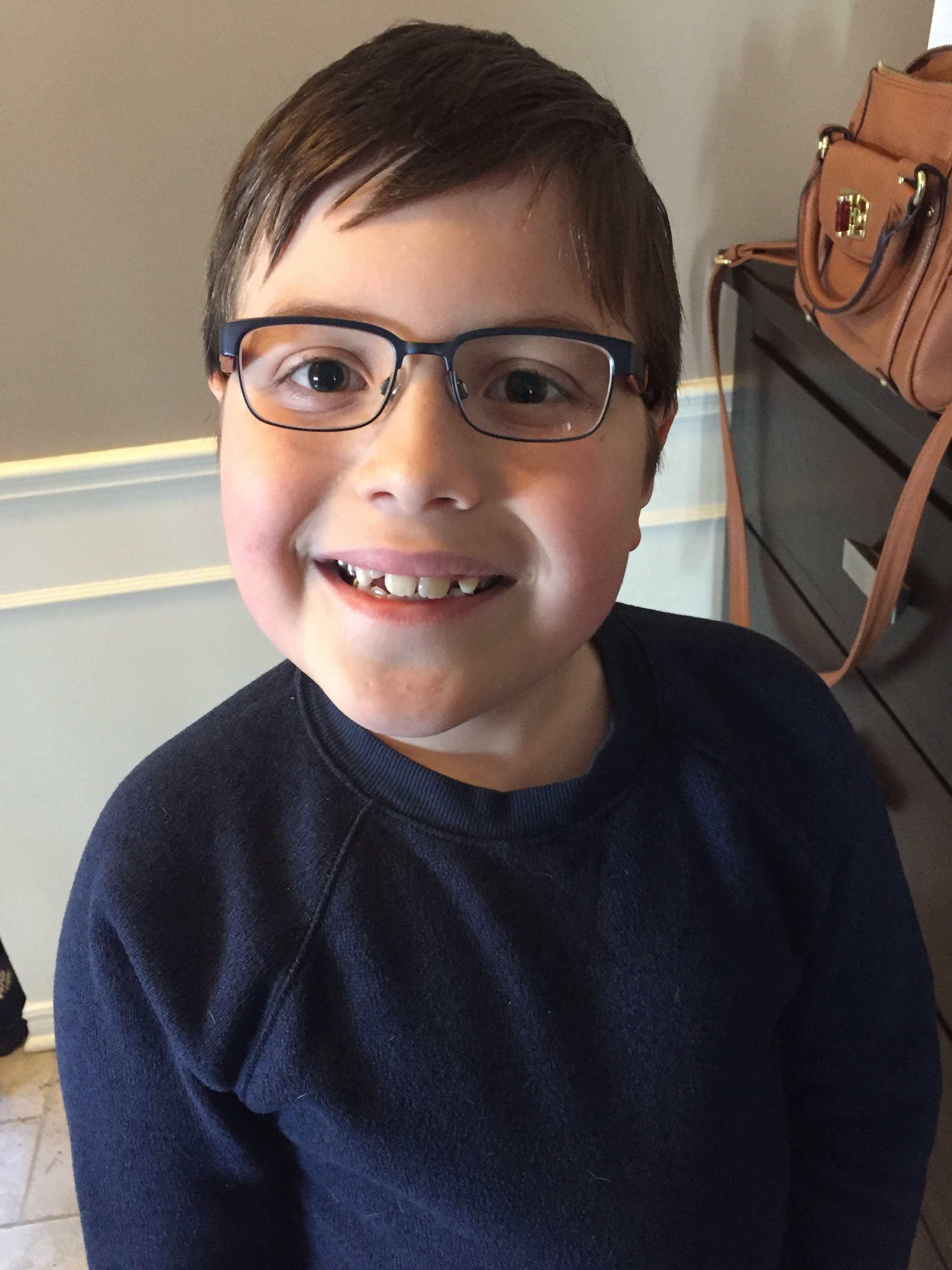
Luca and his first pair of glasses

About six weeks or so before Luca passed away, we had taken him to Lens Crafters again to get his eyes re-tested. He had started to complain once again that he was not seeing well at school. We had mentioned his previous steroid use, so they tested his ocular pressure, and in both eyes the pressure was elevated. This is rare for a child. The plan was to repeat this assessment in three months, and if there was no change he would be referred to another specialist for early glaucoma prevention. Unfortunately, he passed away before we he could have this reassessed. I remember posting on the Platelet Disorder Support Association (PDSA) Facebook page to see if anyone with ITP, particularly those that used steroids, developed glaucoma. It was not a side effect we were ever told about, and what I could look into myself using the internet seemed to imply the risk was for long term steroid use – not a few short pulse treatments. 

When Luca had his brain bleed, he did not present the traditional way in which we were counseled to watch for. He did not have a progressive thunderclap headache that was unresponsive to Tylenol and got worse over time. In fact, this headache was not even as bad as when he had suspected aseptic meningitis following IVIG the first time he used it. Aseptic meningitis as a reaction is not typical (0.5-11%), but well documented in a significant number of individuals with ITP. His headache due to the brain bleed resolved with Tylenol but returned within a 12-hour period. He presented more with lethargy and symptoms his specialist team were confident were due to ‘a bug’. The overall risk to develop a brain bleed as a child with ITP is less than 1%

Most brain bleeds with ITP are more of the subdural hematoma type. Luca developed a left lobar hematoma with a small subarachnoid component, and due to the increased prolonged intracranial pressure there were multiple infarcts noted with some bleeding deeper in his brain. So once again, he is not presenting in the same way. Following his first craniectomy he required another one because the intracerebral pressure was too great. This also isn’t typical. It also wasn’t typical that before his first craniectomy, Luca’s pupil become ‘unfixed’ and there was hope he would make it, but that didn’t happen. More than 50% of individuals with ITP who have a brain bleed survive with often non-serious neurological sequalae, if detected early.

When I hear the phrase “it’s not expected” or “it’s not likely” or “it’s very rare” I just roll my eyes. Calling something rare is completely subjective. For instance, 1% is still one in every 100 people. So really that isn’t really a rare risk. When you are dealing with rare things, over-confidence can be destructive.

Depending on how you define what a rare disease is, approximately 1 in 12 people on this planet have a rare disease. Yet, physicians in medical school are still learning to look for horses instead of zebras when they hear hoof steps. And worse, specialists become so obtuse about things they see. They fail to reach out to other specialists when the usual becomes atypical. Luca deserved better. I believe he should still be here with us.

Luca – Forever Our Son

First blog entry.

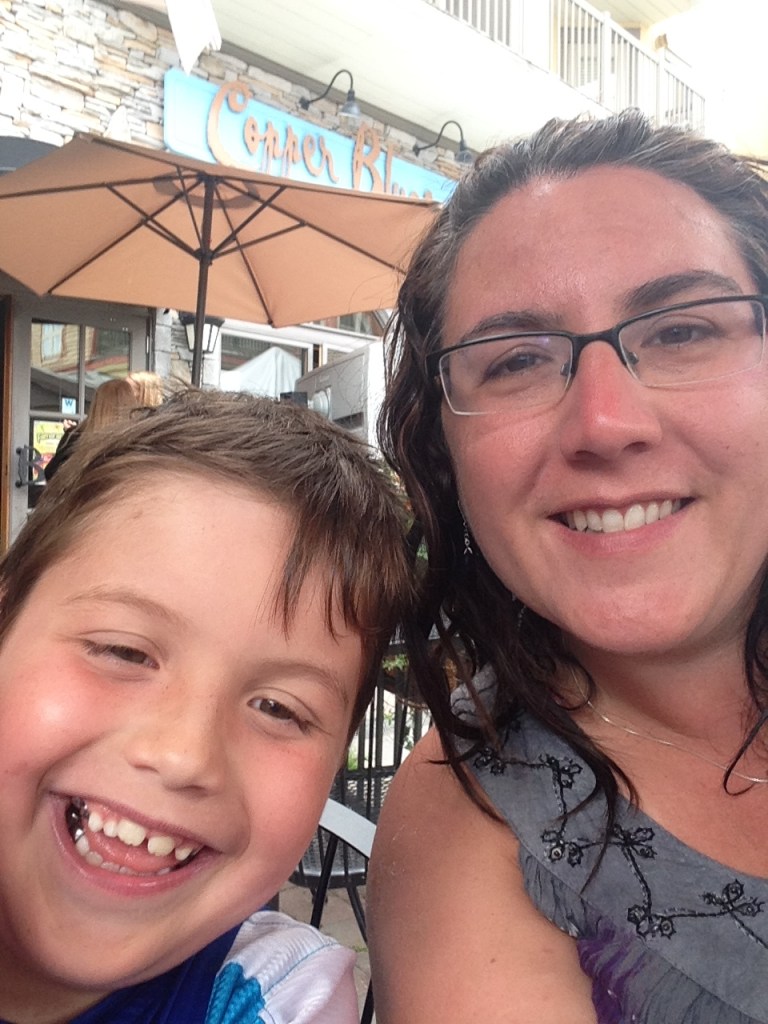
Luca and I – summer vacation with our family in Collingwood at Blue Mountains Resort (August 2015).

Luca was 10 years old when he passed away. He was my first born, the one who made me a mom. The first who made me realize what true love is and filled my life with so much love and light. His entire family loved him fiercely and his friends adored him. So many individuals told me Luca enriched their life, and a few of his friends over the years told me Luca made their heart happy. Music to a mother’s heart. Luca was very social and loved his friends, teachers, family, dogs, nature, and rainbows. He loved math and science and was very creative and wanted to be many great things when he was older, especially a dad.

Luca was diagnosed with immune thrombocytopenia (ITP) when he was 7 years old. ITP is a rare autoimmune blood disorder where the bodies antibodies destroy platelets and platelet production is often impaired as well. Platelets play many roles, but mainly they are essential for bleeding prevention and cessation, and they maintain the integrity of blood vessels. Normally, individuals have 150,000-400,000 (microliters) of platelets however in ITP, the platelet count is less than 100,000. For Luca, his platelet count was usually below 10,000. In May (2018), he unexpectedly developed a brain bleed also called an intracranial hemorrhage (or ICH).

ICH’s are rare in ITP. In fact, we were always told not to worry about them because they are so rare, and we were told many times the risk for children with ITP to develop an ICH is less than 1%. We later learned this statistic is higher among children who experience the type of bleeding Luca had developed, but still considered a low risk overall. Luca died on May 15, 2018 from the ICH he developed. In a later blog post I will review this in more detail, and share with you how our entire world shattered, and our hearts broke forever.

My motivation to create this blog site is to share my experiences to help prevent this from happening to another family. My son had atypical ITP, meaning his disease course worsened over time, and some of his bleeding symptoms were very serious. Most children with ITP have only mild bleeding symptoms. Not many hematologists in their career will see a child like my son.

Many of the entries I will post here I actually wrote soon after Luca passed away. I had not intended to develop a blog at the time. I was writing to help cope with the loss of Luca. I needed a venue to share my throughs and words and feeling or they would devour me whole. Over time, I realized writing a blog and having a designated place to share my entries seemed like a logical and natural thing to do.

My entries will focus on ITP, Luca, Luca’s disease course and brain bleed, child loss, grief, lessons learned from ITP, how I have been affected by grief, and how my family as a whole has been affected by grief and the loss of Luca who in many ways is our core.

Note: If my blog posts are helpful to you, please let me know how they have helped you by sending me a message.