
Without fail, every time I see someone (especially a child) riding their bicycle I feel like I can’t breathe for a moment and I am overcome by a plethora of emotions. I remember when Luca was really young, he loved vehicles especially cars and bicycles. He had a tricycle that he loved to ride, and he was so happy when he got his first bike with training wheels. It was orange and the seat had flames on it. He thought it was the coolest bike in the world. I remember we made a special trip to the store so Luca could pick out his very own helmet and the first few times he used his new bike we took pictures and celebrated every moment. Around the time Luca was diagnosed with ITP in 2015 he wanted desperately to learn how to ride his bike without training wheels on. All his friends were riding their bikes without training wheels and he wanted to do this too.
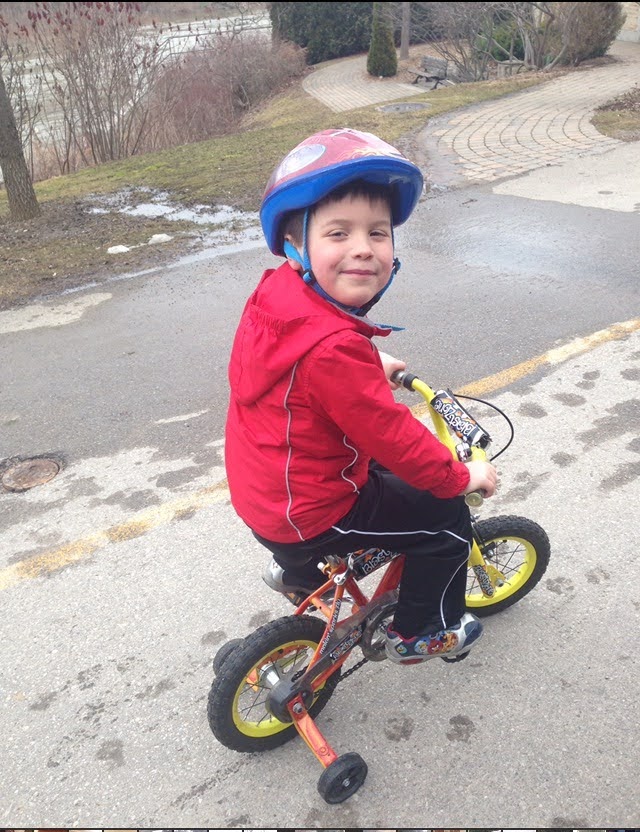
When Luca was first diagnosed with ITP his specialist was very confident Luca’s autoimmune blood disorder was temporary and would disappear within a year. Since Luca’s platelet count during this first year was almost always below 20-30,000 (normal range is 150-400,000) we decided to keep his training wheels on for a little while longer. We didn’t want to take any chances, and we wanted to keep Luca safe. It seemed like a small sacrifice, and it was only supposed to be for a year.
A year passed, and Luca was diagnosed with chronic ITP, which meant his condition was life-long with little chance for remission. His levels were lower in the second year (on average) and he had more spontaneous bruises and clusters of petechia from time to time. Out of fear, we told him we wanted him to continue to keep his training wheels on. At this point, Luca was 8 years old. He was embarrassed and decided he would not ride his bike anymore.
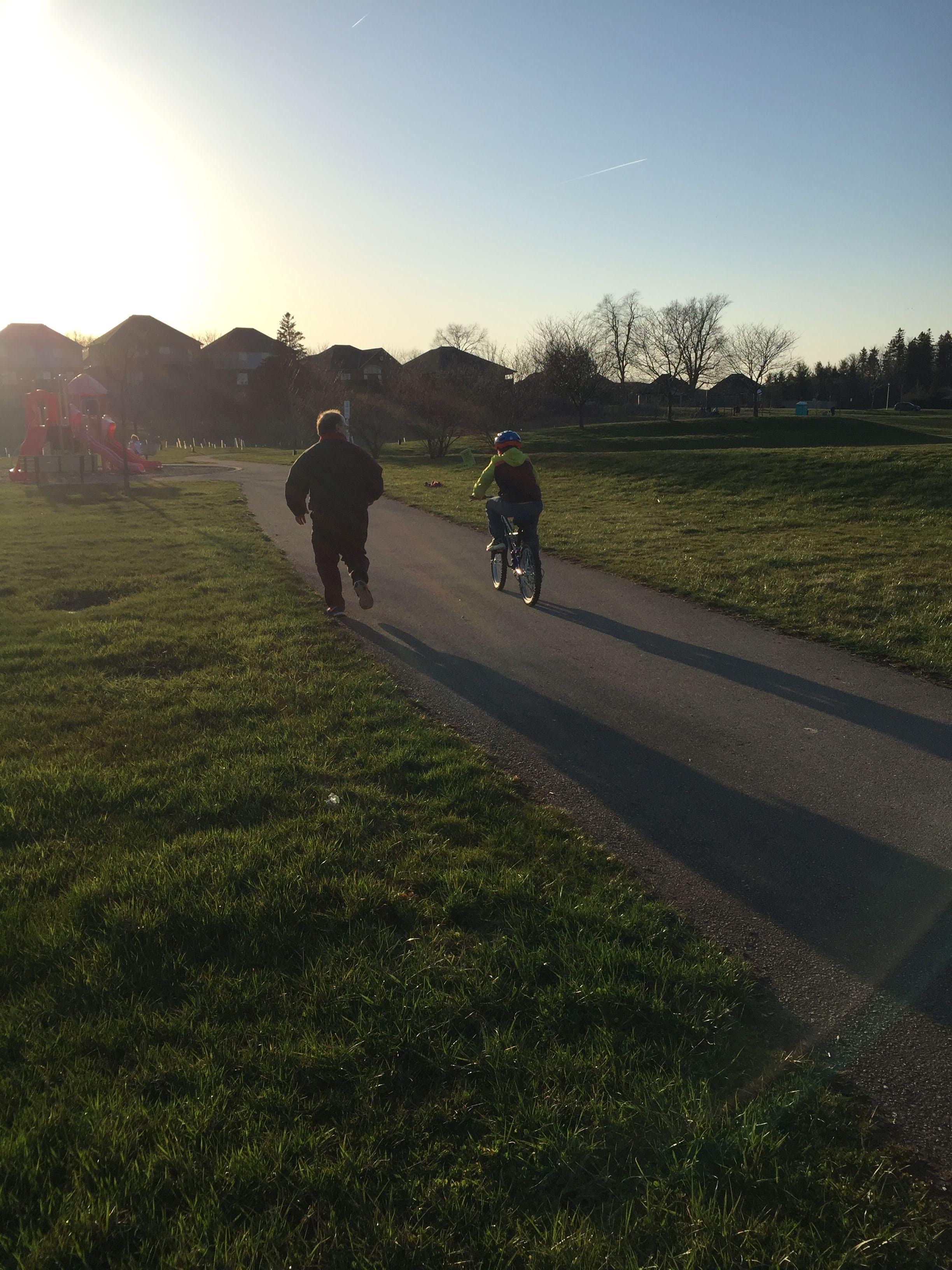
The following summer, in 2017, we were started to relax a bit more. We replaced Luca’s orange bicycle with a larger blue one. Luca was still considered a non-bleeder until that fall, and we knew we would be dealing with this for life and that Luca would continue to have restrictions in his lifetime. We wanted him to live his life knowing that his self-esteem and life skills were important too. His hematologist and team were completely fine with Luca riding a bike, as long as he had a helmet on. At this point in his ITP journey, Luca’s levels were almost always below 10,000 (on average). ITP wasn’t going away, and Luca was becoming more upset that he was unable to do simple things other children his age could do. Part of this was just a reality for Luca, he had ITP. If his hematology team was okay with him riding a bike, we figured we should be too. So, with a lot of anxiety, and no more training wheels, my husband taught him how to ride his bike. One night was spent just learning how to balance on the bike in our driveway. Then, we went to the school grounds to practice since the landscape was flat. My husband ran beside him to keep him safe. Luca was so proud when he mastered riding his bike. I cannot even describe the smile on his face he had. It was ginormous.
Unfortunately a few weeks later, when Luca was trying to slow down to avoid hitting a little girl, he ended up bumping into her accidentally. Thankfully everyone was okay, but the little girl was crying because it scared her. Luca’s heart broke. He felt so terrible. He refused to ride his bike again. Refused. He only wanted to use his scooter. We reassured him it was an accident but didn’t push him to ride his bike. We thought by the following summer he’d forgive himself and want to ride again.
A few months later Luca became a bleeder. He had pretty serious bleeding events, and his platelets continued to be less than 10K. We were terrified, but knew this was ITP and we needed to learn to give Luca the best possible life so he could cope with the increasing anxiety caused by his blood disorder.
When the first nice warm spring day rolled around, I suggested going for a bike ride. It was April 30, 2018. Luca was very apprehensive. I could tell he wanted to, but I knew he was scared and didn’t want to fall and hurt himself. I told him “Luca, you are bigger now. If you feel like you are going to fall slow down and put your foot down, the most that will happen is you will scrap your leg you can do this”. I convinced him to ride his bike. We drove to the park by our house because the sidewalks are too close to the road, and we wanted Luca and his brother to ride only in the park where there was open space and it was safe. Once we got to the park, Luca’s little brother took off on his bike riding up and down the path. I remember walking beside Luca pushing his bike along for him and he looked sad. I asked him what was wrong. He said, “I better not, mom”. I told him he could do this, and should do this. He trusted me. He got onto his bike, with his helmet on, and rode up and down the path. A few times my hubby was running alongside him until he felt comfortable again. By the time we had to go, Luca had the biggest smile on his face. And he said to me “Mom, thank you”.
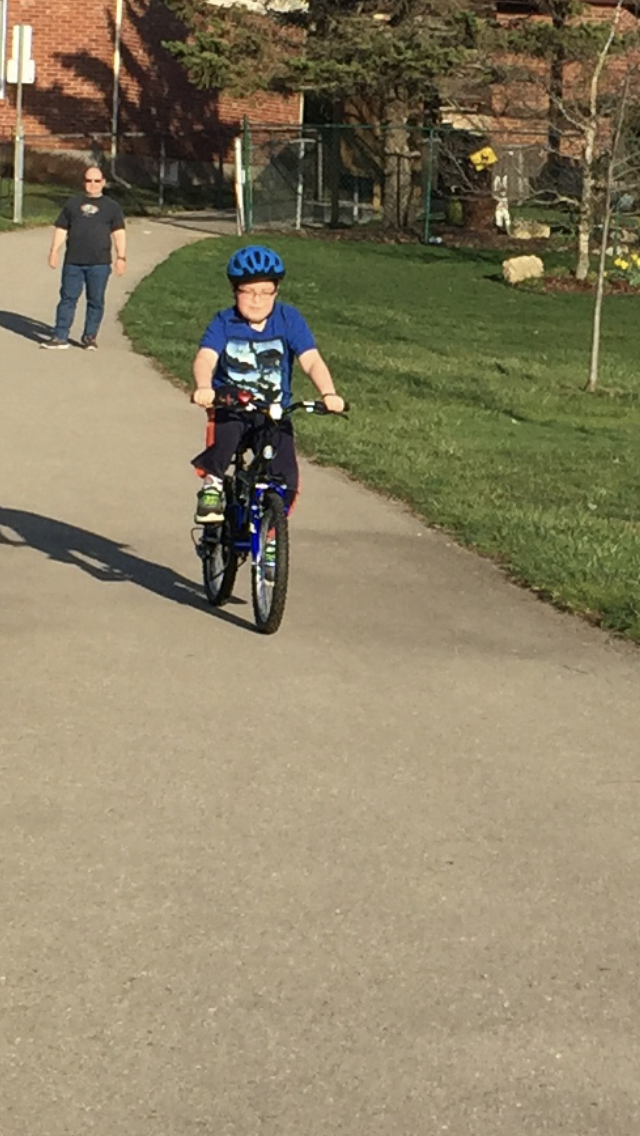
After school the following day, May 1, 2018, I picked up Luca and his brother from school. First thing Luca said to me after telling me he had another nosebleed at school was, “MOM! Can we ride our bikes again after dinner?”. He was living his life again, not fearful he would hurt anyone, and not holding back due to his ITP. After dinner, we drove to the park. Luca rode with such confidence up and down the path. And then all the sudden, disaster happened.
Luca fell off his bike. Luca fell because he was slowing down to avoid colliding with a group of ladies talking on one side of the path while their children frolicked at the playground. The group of ladies had been there for a while, but while chatting they were moving closer to the center of the path. Luca was scared he would hit them, so he slowed down steered around them but lost his balance. He put his foot down while slowing further down (just like I told him too) but somehow, he fell over his leg and on top of a group of parked bicycles across from the group of ladies. He didn’t hit his head at all, and he wasn’t even going that fast. His chest took the impact. I didn’t see him fall with my own eyes, but I heard him when he started to cry. My husband witnessed the entire event, as did a close friend who was part of the group of women chatting along the path.
Luca was walking towards me hysterical, tears streaming down his face, and his eyes full of fear. He was terrified. He lifted up his shirt as he got closer to me to show me the damage. I froze. I froze like time stopped and I felt anxiety rush through me. I thought to myself ‘oh my God, I broke him’.
I was terrified. I was simply terrified, and I knew he was too. Adrenaline pumped through my veins and all I wanted to do was take him home. We drove home, I drew a lukewarm bath, and I made him soak for a while. I asked him if his head hurt so many times, he said no. I asked Luca if his side hurt, worried he’d have hematuria again or another internal bleed. He seemed fine. He just had a scrape over one side of his chest that literally looked like a panther mauled him. It wasn’t dripping blood. It was oozing a bit of puss and small amount of blood. But the bath helped the scrape to scab over.
We notified his specialists the following morning. I sent them a photograph of the scrape and they asked to see Luca immediately. The specialist poked around Luca’s abdomen and determined he wasn’t bleeding and asked if his stomach was always this bloated. This bothered me because Luca heard and he was very embarrassed about his weight. So I told the hematologist Luca’s been retaining water in his abdomen since the last time he used dexamethasone. He had gained a lot of weight since using the steroid last in February. We used to tell Luca it was water weight since he was ashamed. We were told Luca’s platelet count was less than 5,000. We had never been told his platelet count was that low. We were also told he might develop a hematoma at the site of his scrape and that his ribs protected him and that he’s going to be fine, but if we are worried about the hematoma to bring him back in. This hematologist also told us Luca’s hemoglobin was a bit low. At the time, we did not know what the level was or that it had been the lowest it ever was even during previous critical bleeding events. I did ask if we should repeat the blood test to make sure he’s not bleeding somewhere, and immediately the idea was shut down and we were told it’s probably a concentration issue. I thought quietly to myself ‘ask about treatment’ but we were being rushed out so I thought I’ll call his nurse practitioner if I am still worried the following day.
Luca was fine over the next few days. He did develop more bruises and was already covered in petechia and small blood blisters on his lips when he had the bike accident, but otherwise there was no indication anything could be wrong. Until May 7th, five days later. Luca started to experience symptoms of a brain bleed, but his specialists were unaware of how all brain bleeds present and they believed he was developing a bug. We called three times in 24 hours to see about bringing Luca in, and all three times we were reassured Luca would be fine. He was not fine. He was dying from a brain bleed and increased intracranial pressure that ended up taking his life and changing our lives forever.
We now know that Luca’s increased intracranial pressure was very likely due to the fact that he very likely had a slow bleed from the bike accident, that went unchecked and built up over time until the intracranial pressure caused parts of his brain to displace and cause typical neurological symptoms such as slurring his words when speaking. If Luca’s symptoms of extreme fatigue and a returning headache and lack of appetite had been recognized as signs of intracranial pressure and a bleed, intervention could have started more than 24 hours earlier and maybe he could have survived. Had he been treated 5 days earlier when we were last in the clinic, he may still be here. If Luca was treated over 6 months earlier as we requested to keep his platelet count elevated above 10K this likely would never have happened. My husband and I believe Luca’s death was preventable and because of his hematologists/specialists arrogance and condescendence, he slipped away from us.
Even though I know it was his doctors job to manage his ITP and prevent this from happening, there are still things I will never forgive myself for. It was my idea for him to ride his bike. He trusted me, and I failed him. And I ended up having a hand in his death by allowing him to ride his bike. The guilt is too much to handle most of the time. At least while he was soaking in the bath after the fall and told me he was okay, I told him I was so sorry and so scared. He forgave me. I wish I could do the same for myself.
I believe Luca’s levels should never have been that low when he was a bleeder, and already had serious bleeding events prior to the bike accident. If indeed his brain bleed truly happened from the force of a bike fall, in which his head was not physically injured and he was not even going that fast on a bike, then it’s not safe to have levels that low and he should not have been allowed to do anything much less ride a bike. He was an accident waiting to happen, and he did feel like a ticking time bomb. I will always wonder if I had not pressured him to ride his bike, if he would still be here.
 THE DEATH OF A FAMILY - Our Journey Through Grief, Healing, and Advocacy